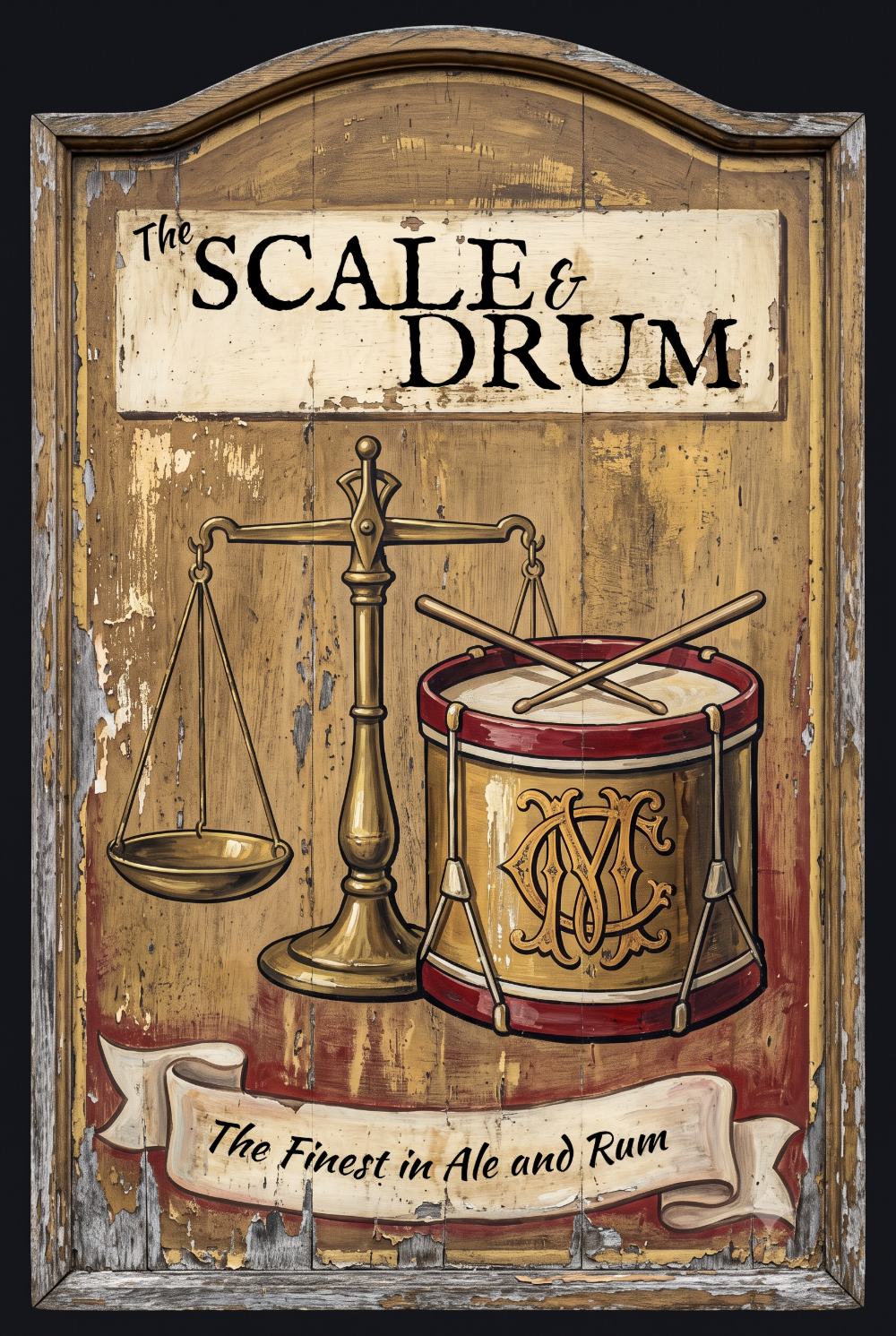
a connections word game by


You are dealt a word to start from and a target five places ahead. Play four words of your own, each connected to the one before it, then link to the target. No category twice, ever. You can stop after any relay point — the size only sets how far you could go.
The last word of the leg is the one you were given at the start. Give the connection and it comes home gold.
Welcome to
a game of creative wordplay and connections.
Any connection you can come up with is valid — but is it the cleverest?
You will be given a starting word and a target word a few steps away. Lay down words of your own, one at a time, each sharing something with the word before it, until you reach your target.
Anything can be the connection — what the words mean, how they are spelled, a smaller word hidden inside, the letters they begin with, a surname they share. The stranger the link, the more it scores. You can never use the same connection twice.
The one rule: All connections need to describe characteristics that apply to both words being connected.
Do you want to see an example?
Suppose the two words that you are connecting are SMOKE and FIRE.
Now suppose the two words that you are connecting are FIRE and INCENSE.
The test of a good connection is whether the connection can be applied to each word separately. If the connection only makes sense when you consider both words together, it is a relationship, not a connection.
Say whatever you notice — there is no wrong answer here, as long as you describe a connection. Whatever you write goes on your chain, and you will be shown another one afterwards either way.
Every word you played is about to light up. Tap the one whose connection you want to retype — the tiles stay exactly where they are, only the wording changes.
The tiles stay where they are — only the wording changes, and the link is scored again from what you write.
A solo game. One sitting, one score, no opponent — except the one you build yourself.
You are dealt a word to start from, and a target word is set five places ahead of it. Fill the four empty slots between them with words of your own, each one connected to the word immediately before it, and then link to the target. That is one leg. Land it and a new target is drawn, five further on, starting from the word you just arrived at. Your score is the points your connections earn — how far apart the two words were, and how few other pairs would also fit what you said. Reaching targets is what keeps the run alive to earn more.
A connection is any true thing two words share. Both are things you find in a kitchen. Both are made of glass. Both can precede "board". Both are older than the wheel.
It has to be true of both words. Shell and pinecone are not types of insect, and saying so is not a clever connection, it is a false one. That is the only kind of wrong answer there is: not a weak link, not an obvious one, not one somebody else would have phrased differently — a claim that simply isn't so.
And nothing checks you. The game cannot yet tell a claim it has never heard of from one that is untrue, and it would rather accept a good link it cannot verify than reject one. So the honesty is yours to keep. In a solo game that costs you nothing to break and buys you nothing either — a personal best built on things that were not true is a number you already know is worthless. The chain is the record, and it is meant to be read by somebody else afterwards.
A connection has to be a property each word has on its own — not a relationship between the two tiles. Both hide an animal is a connection: it is true of each word separately. Take a letter off one and you get the other is not — neither word has any property there, they simply happen to sit near each other in the alphabet, and it isn't even true in both directions.
This is the Only Connect test. A wall group is always a shared property, because a relationship between two things can never define a group of four. The distinction survives contact with wordplay, too: both are anagrams of other words is a real property of each, while one is an anagram of the other is just adjacency. The first is a connection; the second is a coincidence.
A word can connect through what it is as a name, not only what it means. Crane and King are both surnames of famous authors — both called Stephen, as it happens, which is a better version of the same connection because it narrows the field further. Football players, scientists, astronauts, saints, racehorses: any set at all, so long as it is one other people could recognise.
That last part is the whole rule. Both are surnames of people in my bowling league narrows the field beautifully and is worth nothing, because nobody else can check it or enjoy it. The person, place or thing has to be of note.
Where exactly that line falls is deliberately not written down. It runs from surnames of US presidents (unarguable) through surnames of Booker winners (fine, if narrower) to people I went to school with (no), and arguing about the middle of it is part of the game rather than a flaw in it. This is borrowed from No More Jockeys, where the person named must be someone the table has heard of. The difference is that a table enforces it by pulling a face, and you are playing alone — so the game says it out loud instead, and simply never awards the rarity it cannot verify.
The tutorial walks through four kinds of connection — a word buried in the spelling, plain shared meaning, a compound both words make, and who the words name. Those are four doors, not the four doors. Some others, none of them obvious:
Hidden initials. Elephant, leopard and panther all hide EPA. Longer sets of initials pay more, and unusual letters pay more still — FBI is worth roughly twice NATO, because F, B and I are scarce among the words and N, A, T and O are everywhere.
Patterns in the spelling. All five vowels in one word. Every letter in alphabetical order — cow, deer, fox, ant. The same letter three or four times over: banana has three A's, scissors has four S's.
Letters added rather than taken away. A prefix both words accept, or a word both can be followed by — the tutorial's matchmaker and kingmaker.
Things outside the dictionary. A brand, a place, a person. KOA is a campground chain and it is hiding in koala — the sort of claim no word list can settle, which is precisely what the referee is for.
Going looking for one. On a desktop the tile tray has a filter box, and it searches two ways. In order lists the tiles with your letters sitting readable in them: type ale and back come stable and coffee table. Any order lists every tile holding those letters anywhere at all, which adds colonnade, athlete and stabiliser. Use it when you already have a word in mind and want to know which tiles are hiding it. It asks the same question the scorer asks, so anything it shows you will count.
The scattered kind is far commoner than the readable kind — on a full tray there are tens of them against a handful — and it pays more, because rearranging the letters is work that reading them off never asks of you. If you find the same word buried in two tiles and it is scrambled in both, that is the better find of the two, not the scruffier one.
This list has an obligation attached, and it is worth stating so the next person keeps it: anything the scorer learns to reward and this section never mentions is a door nobody finds. That has already happened once, with initialisms — the game had been scoring them for a day before anything told a player they existed.
Then take the obvious play. Both hide some word, both start with the same letter, both are five-letter words, or a word sitting on the join of a compound — key signature holds signature. All of these are legal, and one of them is always available.
They pay the minimum, and the reason is the whole scoring model in one sentence: a connection pays for what it rules out. An obvious claim rules out almost nothing, so it earns almost nothing. It still gets you off the tile and down the road, which is sometimes the only thing that matters.
Pressing I'm stuck offers you a hint before it offers to end the run — one per leg, reset at every relay point. It names the kind of thing hiding in front of you and never the tiles, so the find stays yours. When there genuinely is nothing clever on the table it says so, and tells you it is desperation time.
The cheap play is allowed; the false one is not. A connection that is not true of both words scores zero — which is what keeps every other number in the game meaning something.
No category twice. Every connection you use is spent for the rest of the run, and spent categories never come back. The first leg is easy. By the fourth you have burned the obvious ones and are hunting for links you would never have thought of — which is the whole point.
This is the solo shape of No More Jockeys: the opponent is the ruleset closing in behind you, made entirely out of your own earlier cleverness.
You may not arrive early and you may not overshoot. If the target is one of the words you could legally play, playing it before the fifth move is refused — it is the destination, not a tile. On the fifth move, nothing else will do. This is what stops the game being a straight chain: you have to steer.
Every leg after the first begins from the target you have just landed on. If you picked your own opening word, leg one would be the odd one out — and it would not really be a move, since it connects to nothing. So the game deals it. Every leg has the same shape: a word in front of you, four to find, then the target.
You are not shown every tile at once. Half your tiles are in the tray and half are still in the bag. Every time you play a word, one comes over from the bag, dropped anywhere in the tray and marked NEW in blue for one move.
Two things follow from that, and they are the whole point of it:
You only draw by playing. Being stuck does not get you a new word — there is no button for that. A tile you cannot place stays in front of you until you find something to do with it, and that is usually when you start looking at its letters instead of its meaning. Some of the best connections in this game come from being stuck with an awkward word.
The bag runs out. It lasts about half the run. After that nothing new arrives and the tray thins out, down to the last three or four words. The game tells you once when the bag is empty; from then on, what is left is what you have.
So a word you cannot use is not only a problem — it is also currency. Spending it on an obvious, low-scoring connection will buy you a fresh word to look at. Whether that is worth the points is the sort of decision this game is made of.
Every claim you make is read by a referee — dry, analytical, and not easily impressed. It does two jobs, and they finish at different times.
First it gives a verdict: does the thing you said actually hold for both words? That comes back in a few seconds. Then it goes away and counts the library — how many other words in the whole word bank your claim would also have been true of. That takes a minute or two, and it is the part that decides most of your score.
So a score can arrive in two pieces, and a link still waiting on the count is marked with a +. The number beside it is real; it is just not finished. You can carry on playing, and it will settle itself. Nothing is lost by walking away from it, and finishing a run does not throw away a count that is still coming.
The referee can agree with you, price your claim lower than you hoped, decline it, or find it false. A declined link still leaves you where you got to — the referee could not work out how to count it, which is the game's blind spot and not yours. But a claim it counts and finds untrue of your two words scores nothing at all: not a reduced number, zero. The points you were shown while it thought were an advance on a claim it had not read yet, and a false claim gives them back.
This is the one place the game is strict, and it is strict on purpose. Every other number here is a matter of degree — how rare, how far, how hard. Whether the thing you said is true of both words is not, and if it were free to say otherwise then nothing else on this page would be worth counting.
It shows its working: the claim as you wrote it, what it counted, and the words it counted. That last part is there so you can tell a harsh ruling from a wrong one.
Two different things earn points, and it is worth knowing which is which.
Turning up pays for the shape of the move: how far apart the two words were, whether you declined an easy link in favour of a harder one, whether you entered a word on one meaning and left it on another. That last one is the pivot, and it is the move this game is named after — scale and drum are a pun before they are a pub.
What your claim rules out pays for the find. A connection that would be true of six words in the library is worth far more than one that would be true of six hundred. This is the part the referee counts, and the part worth playing for.
Rare is not the same as hard. Rarity measures how specific your claim is, not how much work it took you to see it — and the two genuinely come apart. A buried word sitting in plain order is scarcer than a scrambled one and far easier to spot. The game prices what you ruled out, because that is the part it can check.
If your connection turns on letters rather than meaning — a word hidden inside both tiles, a shared beginning — Clarify lets you name the buried string outright instead of hoping the sentence carries it. It costs nothing and it is not an admission of anything. A claim the referee can count is a claim it can pay properly.
When a ruling goes against you, you can let it stand with Fair enough, or take it up with Plead my case and say it again in your own words. The referee is not told there was an earlier ruling, so it judges the claim rather than the argument.
One plea per link. As it stands, winning one can restore what the link was worth but never push it higher than it would have been — the appeal is there to undo a misreading, not to bid the score up.
About 2,480 nouns across 74 domains — animals, tools, food, weather, trades and instruments, and also cars, maths, medicine, philosophy, computers, law, geology, mythology, the theatre, the railway and the language of music. Some are compounds (launch pad, plot twist, signal box) and play as one word.
The word bank can be swapped at setup for one drawn from a single book: The Adventures of Sherlock Holmes or Homer's Odyssey. A pack replaces the general library rather than mixing into it — the point is that a round should taste of one book — and each has its own domains, because sorting Homer into "computers" and "government" would be absurd.
Every ordinary word in a pack was checked against the real text and appears in it. That check was worth running: deerstalker, bloodhound, moor and alibi were all in the first draft of the Holmes pack and not one of them appears in the book — the deerstalker was Sidney Paget's illustration rather than Doyle's prose, and the moor and the hound belong to The Hound of the Baskervilles. Names are the deliberate exception: Butler's Odyssey romanises everything, so the pack says Odysseus rather than Ulysses.
Records are kept per word bank. A 145-tile book and a 2,000+ word library are not the same game, so one shared best would flatter you in one and insult you in the other.
The deal takes its tiles a domain at a time rather than scooping a handful out of one bag, so a forty-tile deal reaches every domain and never puts more than two of a kind on the table. Left to chance, a round could open with six garments and six trades — and a board of near-neighbours is a worse puzzle than a board of strangers, because the connections are already made for you.
Set at the start, and it changes one thing: how often the bag hands you a word you can take apart — a word with something buried in it, or one letter away from another word. Every level deals the same range of subjects; no level makes a connection easier to see.
Casual fills the tray with workable words. Standard makes sure every hand has something in it, but you have to go and find it. Wordsmith stops helping altogether — some hands will be stubborn, and the connection will be there anyway.
Challenge — a pre-set course two people can play from the same code — is not open yet. When it is, a shared course will always play at Standard whatever you have set, because two people on the same course are meant to be solving the same puzzle.
Click a tile in the list or open the Tile tray and click one there. Type how it connects, then Add to the chain. Wheel zooms, drag pans, and the board reframes itself on the current leg whenever you have not panned it yourself. Take back undoes your last word, including the category it burned.
A run ends when you say so. Every relay point is a place to stop: take Another relay leg if you are enjoying it, or Finish here and keep the score. I'm stuck ends it from anywhere — nothing else can tell when you are out of ideas. Nobody has to decide how long a game is before they have played it.
© 2026 Paul Burkhard · Mousie Cat Games